

Holy Friday Reflection
Thoughts on the Gospel of St. John 19:20 given at St. John's Episcopal Church in Tulsa, OK

In the name of the Father, and of the Son, and of the Holy Spirit, one God. Amen,
Today as we gather here, we remember the crucifixion and death of our Lord. We are joining the women disciples, St. John, our patron saint, the soldiers, the thieves, in what the Church calls `anamnesis`. Our Christian tradition hasn’t just gathered to remember what happened to Christ on Good Friday, but we have understood it as experiencing a theophany, a faith encounter with the Christ. Because it is our understanding, that our participation in these services constitutes not only a representation, but also a re-presentation - a rendering present again.
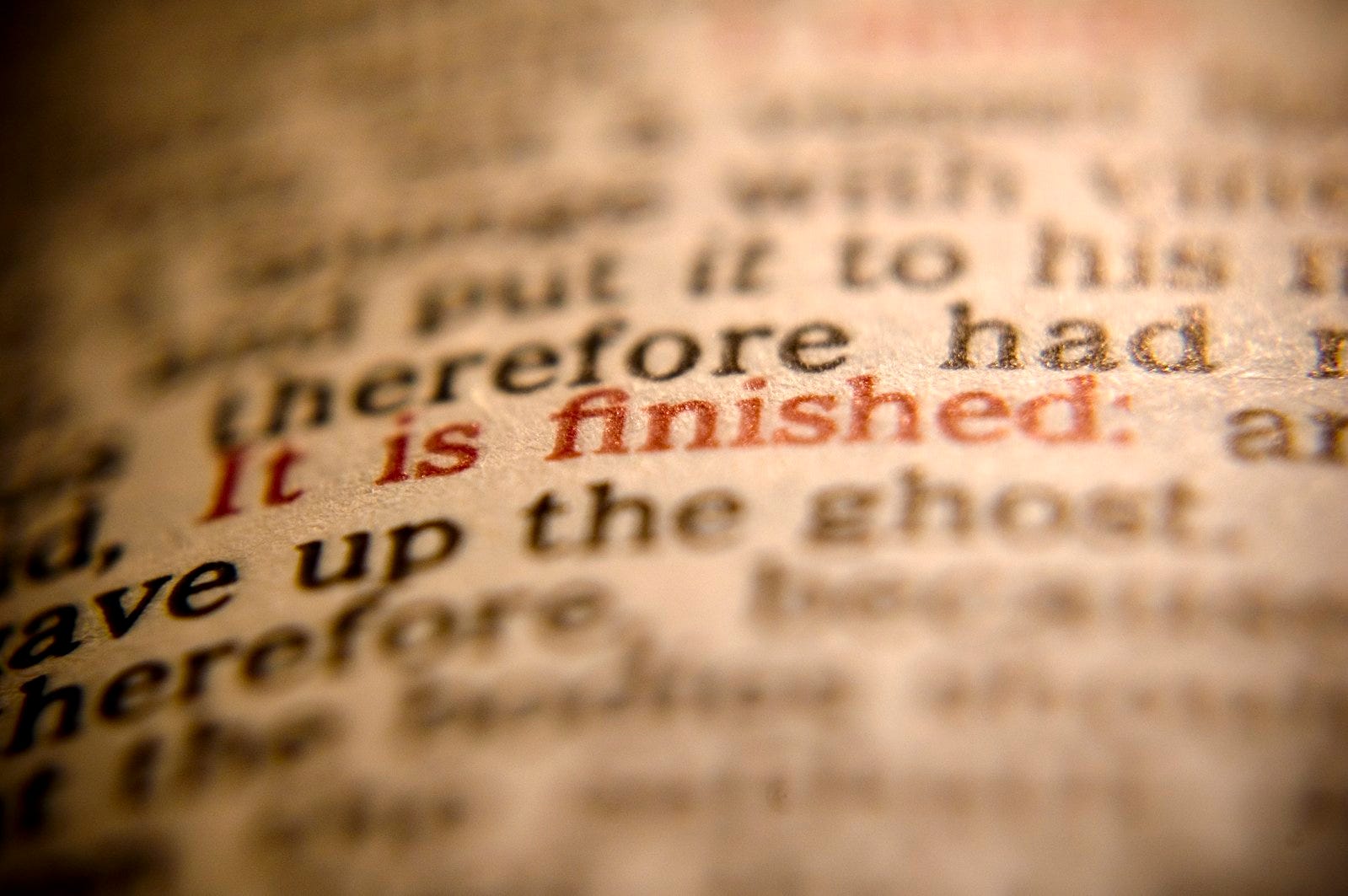
And we sit here, mystically at the foot of the Cross and we read the final words of Christ, one that really hit me is found in John 19:30 – Christ says “It is finished.” Three small words that bear an unimaginably significance. When reading in your Bible, it would be easy to miss these words without the red letters, yet the weight of what Christ says is immense.
In Greek, St. John uses the word “Tetelestai.” We see that translated as “It is finished.” This makes sense. Christ was just offered sour vinegar and gall on hyssop, the plant that, for the Jewish people of the day, was a sign of purification because it is what they used to mark the doorposts with lamb’s blood in Exodus so the angel of death would Passover their homes. The prefigurement of atonement is met with God’s ultimate atoning act. When Jesus uttered, "It is Finished," He was declaring the completion of His earthly mission, everything His incarnate life had stood for, but also the fulfillment of a divine plan that traced its roots back to the Genesis. This was not merely the end of His earthly life; it was the accomplishment of the salvific work of God which began when Adam and Eve tasted the fruit from the tree of knowledge of good and evil – God’s plan for salvation was finished, or as “Tetelestai” may also be translated, accomplished or complete.
Indeed, when we look back at the history of salvation throughout the Old Testament, we see a series of attempts and failures in humanity's pursuit of redemption. We see the world fall under the weight of sin and God’s mercy as he spares Noah and his family in the ark, a ship of salvation for the human race.
We see the covenant God made with Abraham, a promise of a great nation born from him. God’s promise was not enough for Abraham and his faith wavered, leading to him to attempt to complete God’s plan in his own way by creating offspring with Hagar his slave, since, in his mind, his wife Sarah was too old. God’s promise was ultimately fulfilled through Sarah when she gave birth to Isaac, who would become the father of God’s people.
Then there was the divine promise to the enslaved Israelites in Egypt, a promise of liberation. They were saved when Pharaoh's heart was hardened and he would not relent and let the Jewish people free. God spared them the blood of the lambs during the Passover. Then they were led out of Egypt, through the miraculous parting of the Red Sea, but their faith too faltered in the desert. They questioned God, despite him giving them water in a dry land and manna from heaven, going so far as to construct and worship a golden calf while Moses was on Mt. Sinai with God, receiving the 10 commandments. Even Moses, chosen by God, doubted God and refused to show him honor in Kadesh, keeping him from the promise land.
God sent judges to govern and help His people be a covenantal people, and yet, the Israelites struggled to obey. They believed a king was what they needed and, despite telling them it was not, God reluctantly, provided them with one. However, the kings of both Israel and Judah failed to uphold the divine mandate entrusted to them, leading the people astray and into exile.
So God sent prophets, men to guide and correct His people – calling them back to their covenantal promises. But the people didn’t listen and instead persecuted and killed their prophets. The stubbornness of His people led them into exile, away from their homeland.
Nothing worked to restore us to our rightful place in creation. The rituals of sacrifices and scapegoats, though significant, were incomplete. They could not provide a universal atonement for sins. Each of these events, each of these failures, were parts of the broader narrative, setting the stage for God's ultimate plan for humanity's redemption.
And so, when we return to that pivotal moment on Calvary, when Jesus cried out, "It is Finished," we begin to grasp the magnitude of these words. It was not a cry of defeat, but rather a declaration of victory. The failures, the shortcomings, and the sins of humanity no longer had the final say. Christ's death on the cross marked the completion of God's relentless pursuit of the redemption of his creation and reunion to them.
The divine plan, set in motion immediately after Adam and Eve ate from the Tree in the Garden of Eden, found its fulfillment on the cross, the Tree of Life with Christ as its fruit. Each attempt at redemption, each failure of humanity, was a step towards this moment. God's promise to Abraham, the liberation from Egypt, the judges, kings, and prophets - each was a piece of the puzzle, a part of the journey, leading to the cross.
In declaring "It is Finished," Christ affirmed God's plan for the redemption of humanity was complete. He was the ultimate sacrifice, the perfect scapegoat, the fulfillment of all of the law and the prophets. His death was not an end, but rather a means to the ultimate victory. We know what those present didn’t fully realize yet – Christ will be resurrected. Death is defeated and we have this Gospel, the good news, as a testament to the power of God's love, which has, in Christ, broken the chains of sin and death.
It is finished. The redemption of humanity no longer hinges on us striving for holiness. It is finished by Christ God Himself, who took on human form, lived among us, suffered, and died.
It is finished. Let us remember what these words mean. God’s love for us knows no bound, His grace, no end, and His victory is ultimate.
It is finished. God's plan for our redemption is complete, not because of anything we have done, but because of what Christ has done for us.
It is finished. This is the promise we hold on to, the hope we cling to, and the truth we proclaim. In Christ, our redemption is accomplished.
In Christ, it is finished.